Credit Categories Matching Spending Habits Through Various Life Milestones
Written by Rosa Franke · Sep 7, 2026
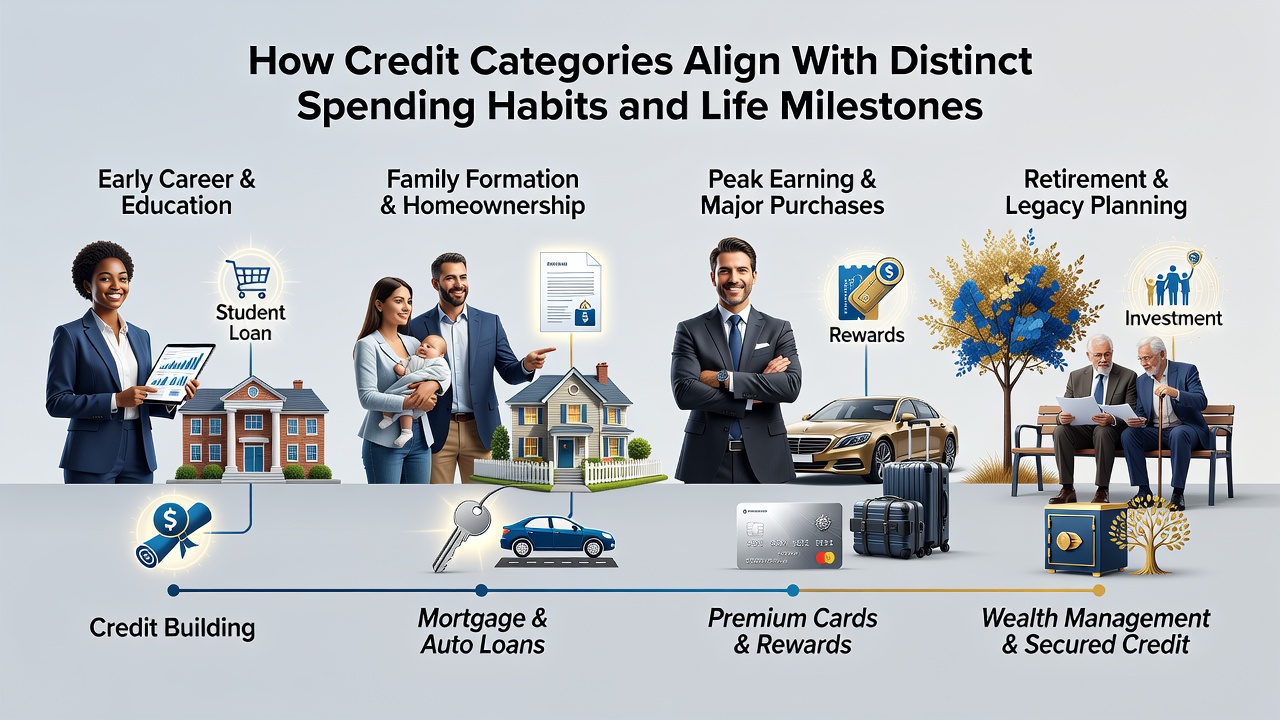
Credit Categories Matching Spending Habits Through Various Life Milestones
People encounter distinct credit card categories at different points in their financial journeys, and researchers have documented how these categories correspond to evolving spending patterns tied to major life events. Data from consumer finance studies reveal patterns where categories such as travel rewards, cash back on groceries, or low-interest balance transfers align with specific phases including education completion, career establishment, family formation, and retirement planning.
Education and Early Career Transitions
Young adults completing degrees or entering the workforce often see their expenses cluster around tuition-related costs, textbooks, commuting, and entry-level living expenses. Studies indicate that categories offering cash back on everyday purchases or introductory APR deals on balances tend to match these habits during this period, as individuals manage limited incomes while building credit histories. Observers note that September 2026 brought renewed attention to student debt refinancing options, with reports showing increased uptake of cards that convert points into statement credits for transportation or supplies.
One analysis from the Federal Reserve examined consumer credit trends and found that cardholders in the 22-to-30 age range frequently activate categories focused on fuel and dining, reflecting commutes to new jobs and social activities that mark the shift from campus to professional life. These alignments help manage cash flow without accumulating high interest during periods of income growth.
Marriage, Home Purchases, and Family Expansion
As individuals move into partnerships and homeownership, spending shifts toward furniture, appliances, renovations, and childcare. Research from the European Central Bank on household finance shows that categories emphasizing travel redemptions or extended warranties on big-ticket items gain traction here, since couples often book honeymoons or finance home improvements. Data reveals that points accumulated on groceries and household goods frequently offset rising family budgets during these years.
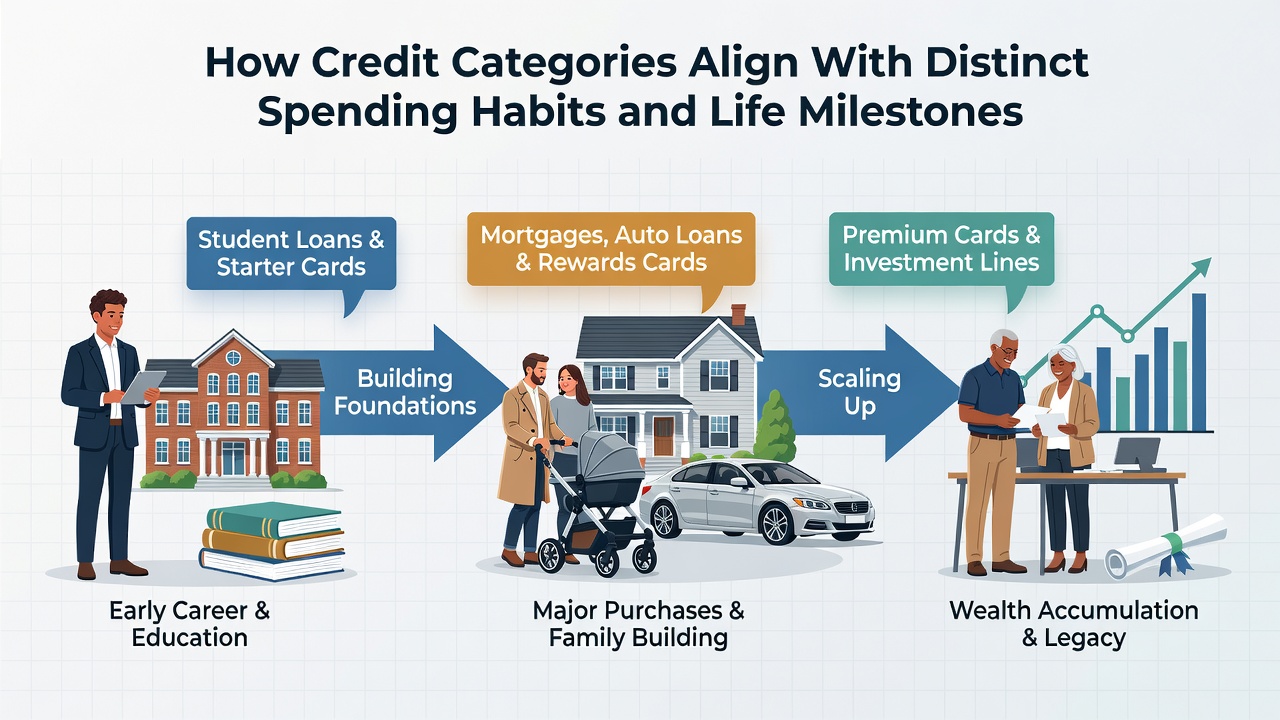
Those who have studied mortgage origination data note that balance transfer categories become relevant when consolidating wedding or moving expenses, allowing users to spread costs over time at reduced rates. A university-led examination of Canadian household surveys further highlighted how parents redirect rewards toward education savings categories once children enter school, demonstrating a clear progression from leisure-focused redemptions to long-term planning tools.
Mid-Career Stability and Investment Phases
During peak earning years, spending habits diversify across professional travel, investment contributions, and leisure activities. Industry reports indicate that premium travel categories and cash-back structures tied to business expenses align closely with these patterns, as frequent flyers and consultants maximize miles on flights and hotels. Figures from the OECD consumer finance database illustrate that individuals aged 40 to 55 increasingly select cards that integrate with retirement accounts or offer accelerated points on recurring bills.
What's notable is the way these categories support wealth-building behaviors without requiring separate tracking systems. People often discover that combining grocery rewards with investment-linked perks creates steady accumulation during this stable window, where income predictability allows for strategic category selection across multiple cards.
Retirement and Later-Life Adjustments
Retirees typically reduce overall spending while reallocating toward healthcare, travel, and legacy planning. Longitudinal data from Statistics Canada reveals that categories offering flexible redemptions for medical expenses or simplified cash back on utilities see higher engagement among those over 65. Observers point out that these alignments help stretch fixed incomes, with many converting accumulated points into statement credits rather than luxury redemptions.
Experts tracking post-retirement consumption patterns emphasize that low-fee categories focused on everyday essentials become primary, whereas earlier travel-heavy structures fade in priority. This evolution reflects measurable drops in discretionary outlays documented across multiple national surveys.
Conclusion
Across documented life stages, credit categories demonstrate consistent correspondence with measurable shifts in consumer expenditures. Government and academic sources continue to track these alignments through ongoing household data collection, providing clear evidence that category selection evolves alongside milestones rather than remaining static. Individuals who monitor their own patterns against available rewards structures can identify matches that reflect current realities without unnecessary complexity.